I recently read a book “Born to Be Wired” by John Malone, which describes the history of US internet cable industry - probably one of the most impressive (and underappreciated) infrastructure buildouts since the railways boom. While the book was quite disappointing in writing, it got me thinking about an essay I wrote during studies on the automatisation of the telephone switchboard industry - a predecessor to Malone's internet cable business and similarly fascinating.
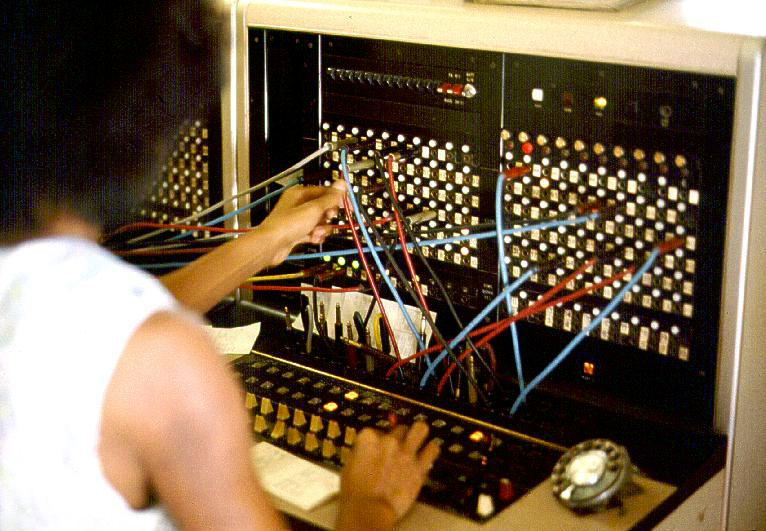
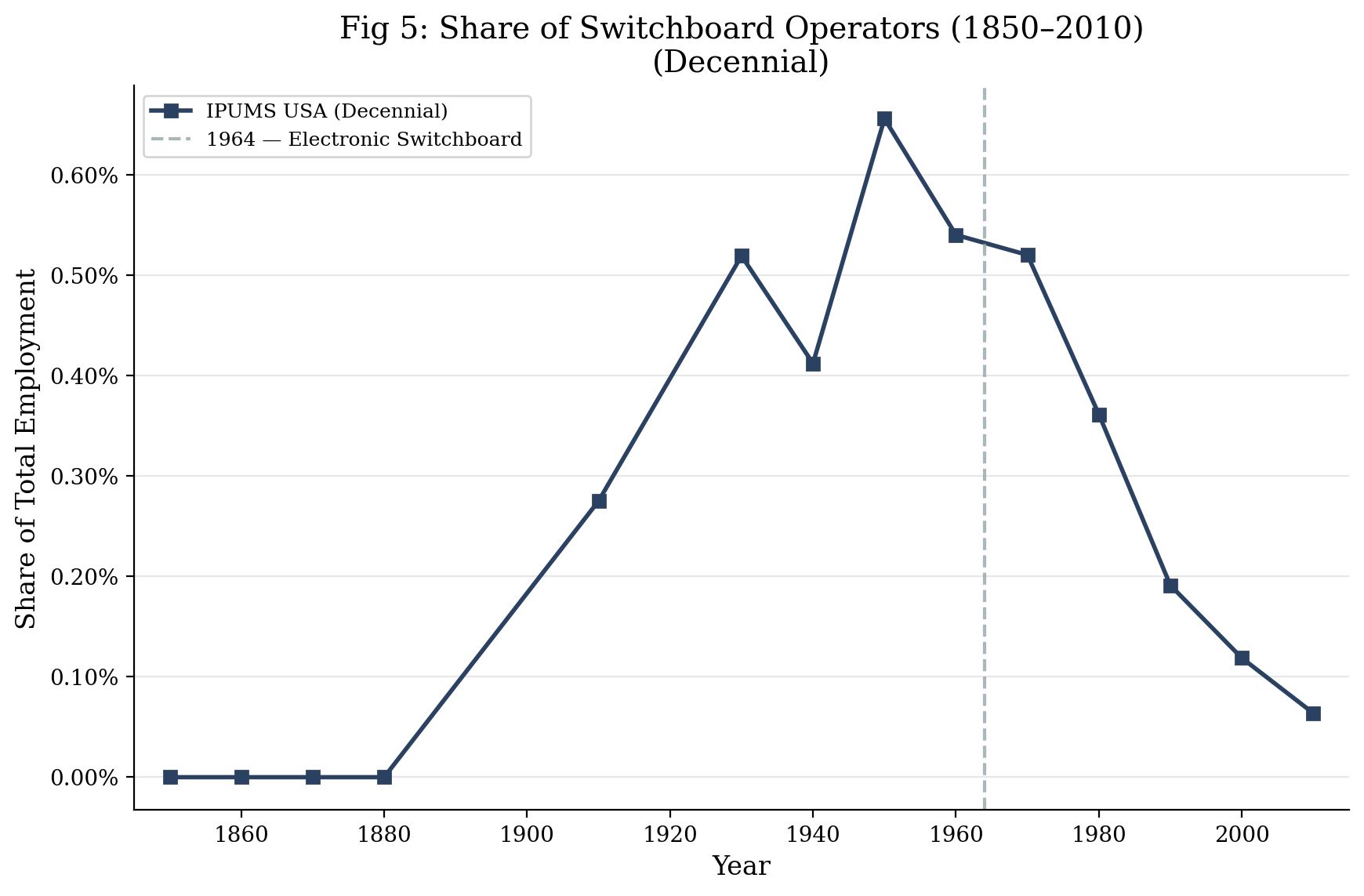
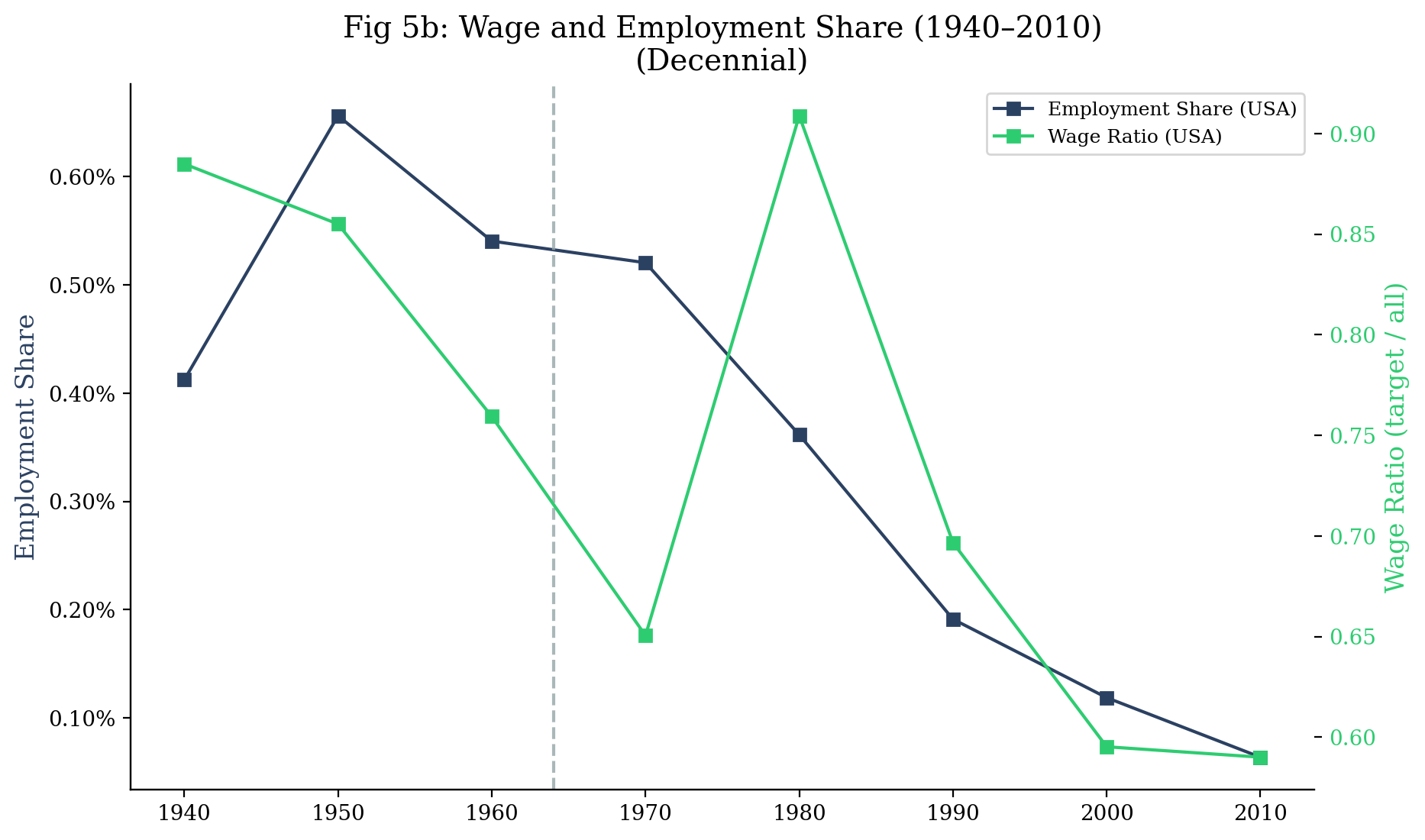
Currently, AI and it's speedup adoption in hardware robotics gives rise to lots of speculation (both radically skeptical or overhyped) on what will happen to labour markets once 'robots replace humans' (AcemogluRestrepo2018, AghionJonesJones2017). I thought rereading the paper would be a good exercise to see if the same effects I studied could take place today. Inspired by Cavounidis et al., 2022, I demonstrate that, counter-intuitively, rapid replacement of manual labourers can lead sometimes to short-term increase in wages. I use the example of the telephone switchboard industry. Before cellular phones, the phone line would need to be physically connected to start a conversation - historically that connection would be made by a trained switchboard operator. In the 1960s, an automated switchboard was introduced, which was able to fully replace a manual labourer. In order to become a switchboard operator you first needed specialised training and a certificate. When aspiring workers realised that the manual telephone operator job will soon be obsolete, a lot of them decided not to enroll in operator courses and instead search for other jobs. This meant the industry experienced a labour shortage, allowing the existing workers to negotiate wage premiums: an obsolescence rent. Firms were forced to pay that rent as they needed the manual labour just long enough to maintain day-to-day operations before a full rollout of the automatic hardware was finalised.
Coming to today, everyone expects major changes in hardware robotics, but cannot yet pinpoint specific specialised jobs or industries that will be affected. Once that ‘unexpected’ innovation materialises in upcoming years (or even months) e.g. a brand-new universal robotic arm in the automotive industry or automatic self-driving truck makes the existing manual positions much less competitive, it will be interesting to see what will happen to that industry from a labour perspective. I would predict (or rather guess) that we could see similar effects as with the phone switchboard industry: no newcomers want to become metal welder or a specialised truck driver as they know that the job will be shortly obsolete. Therefore the industry will shortly flourish with wage increases before the jobs are 'made redundant'.
For ‘white collar’ jobs however, that is a different story as the rate of technological adoption is far faster: it is much easier to replace an office analyst with an excel plug-in than to introduce a full rollout of a brand-new fleet of robotic arms or self-driving trucks. If I have a moment, I will try and extend the original economic model (by Cavounidis et al., 2022) and introduce a ‘speed of replacement’ and ‘capex’ constraints - it would be interesting to see if these would lead to, in theory, different dynamics between manual and non-manual jobs, where manual jobs can exercise a wage premium (just like the switchboard operators did) while office-jobs cannot. Could the 21th century luddites come from ex-consultants and accountants rather than the metal welders?